
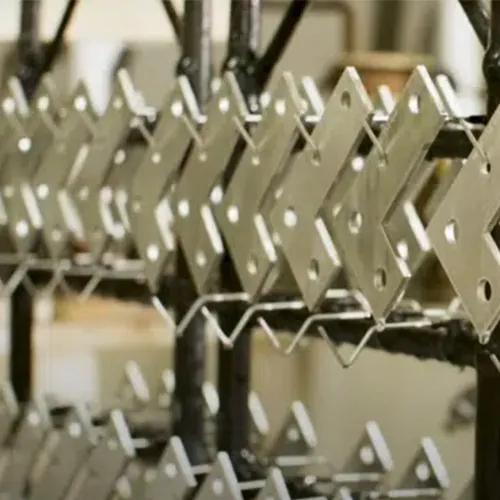
Plating Line. Parts hang on racks and move through the plating tanks.
Electroplating in Simple Words
Electroplating puts a thin layer of one metal on top of another object. We use electric current to do it. The object keeps its shape, but it gets a new surface.
The new surface can look better, last longer or work better. A steel bolt can get a zinc layer to stop rust. A brass tap can get a chrome layer for a mirror shine. A copper bar can get a silver layer to carry power better.
How Electroplating Works
The part goes into a tank of liquid. The liquid holds tiny pieces of the coating metal. These pieces are called ions.
We connect the part to the negative side of a power supply. A bar of the coating metal sits on the positive side. When the power is on, the ions move through the liquid and stick to the part. The layer grows slowly and evenly.
More time and more power make a thicker layer. A skilled plater controls the time, the power and the tank liquid to get the right result.
The Main Steps
| Step | What Happens | Why It Matters |
|---|---|---|
| Inspect and polish | We check the part and smooth the surface | Plating copies the surface, so it must be smooth |
| Clean | We remove oil, dirt and old coating | Oil stops the new layer from sticking |
| Rinse | We wash the part with clean water | Keeps the tanks clean |
| Activate | A mild acid dip wakes up the surface | Helps the metal bond to the part |
| Plate | The part sits in the plating tank with power on | The new layer grows on the part |
| Rinse and dry | We wash and dry the part with care | Leaves a clean, spot free surface |
| Check and seal | We check the look and the layer, then add a clear coat if needed | Protects the finish |
Common Plating Metals
Each plating metal has its own strengths. This table shows the most common ones.
| Metal | Main Benefit | Common Use | Learn More |
|---|---|---|---|
| Gold | Rich color that does not tarnish | Hotel fittings, jewellery, trophies | Gold plating |
| Silver | Best power flow and bright shine | Busbars, cutlery, decor | Silver plating |
| Nickel | Hard and rust resistant | Base layers, car and machine parts | Nickel plating |
| Chrome | Mirror shine and wear resistance | Taps, rods, trim | Chrome plating |
| Copper | Good base layer, carries heat and power | Under coats, cookware | Copper plating |
| Zinc | Strong rust protection for steel | Bolts, brackets, fasteners | Zinc plating |
| Tin | Easy to solder, safe for food contact uses | Connectors, cookware lining | Tin plating |
| Brass and Bronze | Warm decorative color | Door hardware, decor | Brass plating |
Why Companies Use Electroplating
Stops Rust
A coating of zinc, nickel or chrome keeps water and air away from the base metal.
Better Looks
Gold, silver, chrome and bronze give plain metal a rich, finished look.
Less Wear
Hard coatings protect parts that rub, slide or turn all day.
Better Power Flow
Silver and tin help electrical parts carry power with less loss and join cleanly by soldering.
What Metals Can Be Plated
We can plate steel, stainless steel, brass, copper and zinc parts. Aluminum can be plated too, but it needs special steps first. Some plastics can also be plated after a special coating step.
Each base metal needs its own preparation. If you are not sure about your part, send us a photo and tell us what it is made of.
What Affects Plating Quality
Good plating starts before the tank. A clean and smooth part gives a better result. Deep scratches and pits will still show after plating, so we polish them first.
Shape also matters. Sharp corners get more coating, and deep holes get less. Layer thickness, tank control and careful drying all change how long the finish lasts.
You can read about our own polishing work on the mechanical buffing and polishing page.
Electroplating in the UAE
Heat, humidity and salty coastal air make metal rust and tarnish faster in the UAE. Plating is one of the best ways to protect hotel fittings, villa hardware, factory parts and decor.
Our workshop is in Industrial Area 12, Sharjah. We take work from Sharjah, Dubai, Abu Dhabi and Ajman. See the areas we serve or contact our team.
Frequently Asked Questions
It is used to stop rust, improve looks, add hardness, help parts carry power and help parts join by soldering.
It depends on the job. Decorative layers are very thin, thinner than a hair. Hard chrome and some zinc or nickel layers are much thicker.
No. Galvanizing usually means dipping steel in hot melted zinc. Zinc plating uses electricity and makes a thinner and smoother layer.
It usually peels only when the part was not cleaned well before plating. Good preparation is the key to a strong bond.
Often we remove the old plating first so the new layer sticks well and looks even.
Need Help With Your Project?
Send us photos, sizes and quantity. Our team will suggest the right finish and send a quote.
Contact Our Team